NEWS
DEVOTED ELABORATE RIGOROUS HARMONIOUS
 HOME-NEWS-Liming Heavy Industry new
Which type of sand—sea sand, river sand, desert sand, or manufactured sand—is most suitable as construction aggregate? What are the differences between them?
31/01/2026
Sand, also known as fine aggregate for concrete, is an essential material in construction projects and one of the main components of modern concrete. In concrete, it plays the role of adjusting the proportions and filling the voids between coarse aggregates. There are roughly four types of sand: river sand, sea sand, desert sand, and manufactured sand. Which type is suitable for use as construction aggregate? What are the differences between them?
01
Different Distribution Areas
Manufactured sand mainly consists of mechanically crushed mountain sand, and its production enterprises are distributed throughout the country. It can be said that manufactured sand can be produced wherever there are rocks.Natural mountain sand is mostly produced at the foot of mountains, while river sand mainly comes from rivers and lakes. They are distributed in both inland and coastal areas. Mountain sand has smaller reserves, while river sand is widely distributed and has large reserves.Desert sand, as the name suggests, comes from deserts. Geographically, deserts are concentrated in 13 regions worldwide. China's deserts cover a total area of approximately 700,000 square kilometers, and if the more than 500,000 square kilometers of Gobi Desert are included, the total area is 1.28 million square kilometers, accounting for 13% of China's total land area. The arid region of Northwest China is the most concentrated area of deserts in China, accounting for about 80% of the country's total desert area. The main deserts from west to east include the Taklamakan Desert, Gurbantünggüt Desert, Kumtag Desert, Qaidam Desert, Badain Jaran Desert, Tengger Desert, Ulan Buh Desert, and Kubuqi Desert, among others. The reserves of desert sand are enormous.Sea sand, as the name suggests, is sand that has been soaked in seawater. It is mainly distributed in coastal areas, usually located at the confluence of seawater and rivers and in shallow sea areas, existing in the form of sandbars, sand ridges, sand dunes, sand waves, scour channels, ancient river valleys, ancient beaches, and ancient deltas. The main offshore sand deposits in my country are mainly located in the Bohai Sea, the northern Yellow Sea, the Taiwan Strait, the Pearl River Estuary, around Hainan Island, and the Beibu Gulf, with huge reserves.
02
Differences in Mineral and Chemical CompositionManufactured sand's parent rock (raw material) mainly consists of granite, limestone, basalt, gneiss, etc., and its main mineral and chemical components are consistent with the parent rock. For example, granite manufactured sand's main minerals are quartz and feldspar, and its chemical composition is mainly silicon dioxide and aluminosilicates; while limestone manufactured sand's main mineral component is mainly calcite, and its chemical composition is mainly calcium carbonate. Manufactured sand has stable mineral and chemical composition and basically contains no organic matter. In contrast, natural mountain sand has a complex composition, more organic impurities, and a higher clay content.River sand's main mineral component is quartz, containing minerals such as mica, and it contains many impurities. Because river sand undergoes long-distance "tumbling" and repeated washing and screening by water, its compositional maturity is high (referring to the degree to which clastic materials are modified in terms of composition).Desert sand's main component is quartz, with small amounts of feldspar and muscovite. Its source is mainly residual minerals from the weathering of sandstone and granite. The sand in the desert is formed by weathering and accumulation, and harmful substances cannot be removed, resulting in a high content of harmful substances in the sand, and it is fine and loose, not meeting my country's standards for construction sand.Desert sand has a very high alkali content. The salt and alkali components in the sand are corrosive to the steel bars in buildings. High-alkali sand will react chemically with cement and water, leading to insufficient strength of the final concrete, thus causing serious consequences.The main mineral component of sea sand is also quartz. Its compositional maturity is higher than that of river sand, but it often contains shells and rock fragments, and has a higher clay content and more impurities. It is distinguished from river sand by its high content of chloride ions (salt), as well as a higher content of organic matter and a certain content of sulfates and sulfides. The Ministry of Housing and Urban-Rural Development of China stipulates that sea sand used as fine aggregate for reinforced concrete must be desalinated so that its chloride ion content is less than 0.06%. If unqualified sea sand is used directly, the high content of chloride ions will corrode the steel bars, leading to damage to the building structure and greatly reducing the strength, hardness, and load-bearing capacity of the building.

03
Differences in Appearance and Physical Characteristics
Distinguishing manufactured sand, river sand, desert sand, and sea sand by appearance:
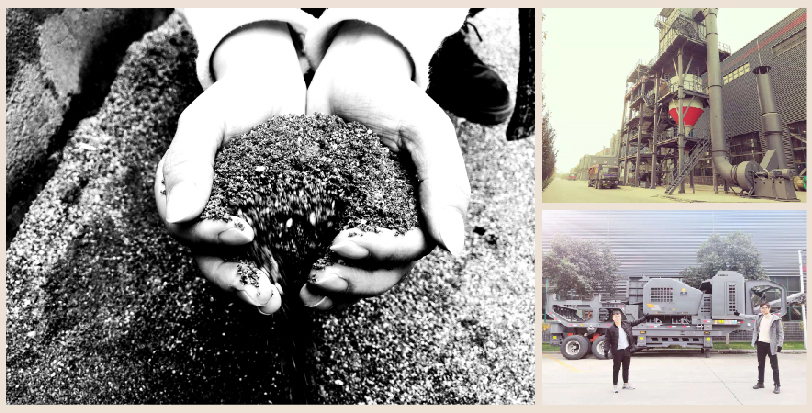
Manufactured sand is a sand and gravel material obtained by crushing using suitable crushers and other professional sand-making equipment. Compared with natural river sand, it has sharp edges, is more needle-shaped and flaky, and has a rough texture.
River sand is directly excavated from riverbeds, so it contains small pebbles and fine sand. These small pebbles are subjected to long-term erosion by river water, resulting in relatively rounded edges. River sand is generally bright yellow and does not feel sticky when held in the hand.
Desert sand is mainly formed by the weathering of rocks and is generally golden yellow. However, because the rocks contain various minerals of different colors, deserts have a variety of colors. The sand in the Simpson Desert contains iron, which turns red after oxidation; the sand in the Lut Desert contains gypsum, and the gypsum crystals turn white after weathering; the Karakum Desert is mainly formed from the weathering of black rocks; and the sand in the Arizona Desert contains many minerals of various colors, making it colorful.
Sea sand is sand produced in the ocean (including beach sand and seabed sand) and near estuaries. Due to the influence of seawater, untreated sea sand has a high salt content and feels sticky when held in the hand. In terms to color, sea sand is relatively dark, appearing dark brown. In terms of particle fragments, sea sand generally contains shell fragments.
The physical characteristics of sand mainly include fineness modulus, hardness, and roundness. The fineness modulus is an indicator used to measure the coarseness of sand. Based on the fineness modulus, sand can be divided into three categories: coarse sand (3.7–3.1), medium sand (3.0–2.3), and fine sand (2.2–1.6).
Manufactured sand is basically medium to coarse sand, with a fineness modulus between 2.6 and 3.6. Its particle shape and gradation (i.e., the proportion of large and small particles) can be adjusted according to use and needs, while its hardness is determined by the hardness of the raw materials. Manufactured sand has poor particle roundness; most particles are angular and have rough surfaces, which results in higher strength concrete.
Natural sand varies in coarseness. Mountain sand is angular, has a rough surface, and generally consists of coarser particles. River sand and sea sand, on the other hand, have relatively finer and more uniform particle sizes, but the grading of river and sea sand varies considerably in different regions. River sand is classified into various grades during the screening process, while there are currently no clear rules for classifying sea sand. Generally, river sand has a larger fineness modulus and hardness, better roundness, and a smoother surface; while sea sand has a relatively smaller fineness modulus but greater hardness, better roundness, and a smoother surface.
The sand in deserts generally has a diameter of less than 0.25 mm. Desert sand is too fine and has an oily, smooth surface, making it unsuitable for construction.
04
Differences in Uses
Whether artificial sand or natural sand, their main use is in construction. In addition, river sand and sea sand can also be used in industrial fields such as casting, grinding, and rust removal.
River sand is also known as standard cement sand and is widely used in construction, concrete, cementing materials, road construction materials, artificial marble, and as a material for testing the physical properties of cement (i.e., standard cement sand). River sand can also be used in casting, forging machines, metallurgy, heat treatment, steel structures, frame structures, containers, ships, shipbuilding, bridges, mines, etc., for sandblasting, rust removal, strengthening, shaping, and as an additive to heavy concrete and high-temperature refractory materials to increase their wear resistance, high-temperature resistance, erosion resistance, electrostatic shielding, radiation protection, oil well filter tanks, counterweights, etc.
Desert sand mainly comes from the long-term weathering of conglomerates and quartz. Desert sand is very fine and contains a lot of dust, belonging to the category of ultra-fine sand. If it is to be used as construction aggregate, it needs to be washed. However, this is almost impossible, as water is extremely precious in desert areas, and using it to wash sand would be too wasteful. Moreover, deserts are far away, and transportation costs are high. The construction market requires a large amount of aggregate, resulting in very high overall costs, so no state-owned infrastructure group has ever adopted it.
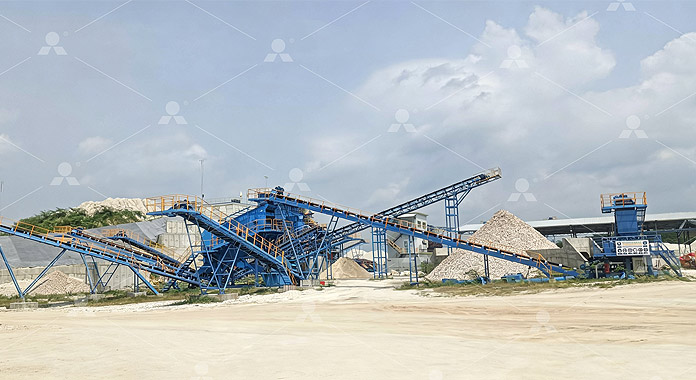
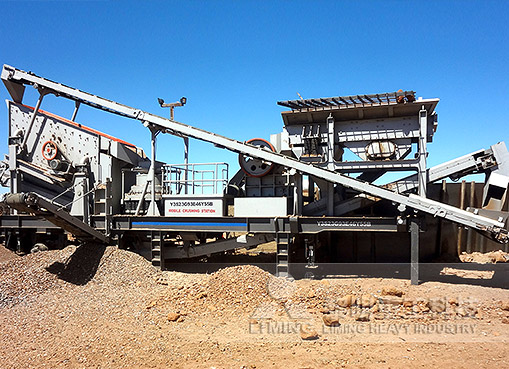
Manufactured sand is currently the most popular source of sand and gravel. Manufactured sand is aggregate produced through a combination of crushing equipment. For example, through the combined operation of jaw crushers, cone crushers, and impact crushers, manufactured sand smaller than 3mm can be produced. The raw materials can come from river pebbles, mountain rocks, quartz, granite, basalt, etc. Manufactured sand has low roundness and larger angularity. It is currently widely used in the sand and gravel aggregate market, effectively replacing river sand as the main source of sand and gravel. Projects with large sand and gravel demand include subway construction, libraries, parks, elevated bridges, squares, stadiums, and other infrastructure construction, reinforced concrete high-rise buildings, roads, railways, bridges, etc. Wherever sand and gravel aggregate and natural sand are needed, manufactured sand can be used. Sea sand is a major raw material for mechanical and foundry molding sands, abrasive materials (sandblasting, abrasive paper, sandpaper, abrasive cloth, etc.), sandblasting, rust removal, and descaling treatments. It is also used as a raw material for ceramics and refractory materials, high-silica bricks and ordinary silica bricks for kilns, and silicon carbide. It serves as a raw material or additive/flux for metallurgical silicon metal, ferrosilicon alloys, and silicon-aluminum alloys. When used as fine aggregate in reinforced concrete, sea sand must undergo strict purification treatment. Many regions have already prohibited the illegal use of sea sand in construction. Currently, one of the main uses of sea sand is as filler material for engineering construction, especially land reclamation projects. In 2019, Guangdong province auctioned off the sea area use rights and mining rights for three blocks of sea sand, with the sea sand resources specifically designated for land reclamation projects such as the Hong Kong airport expansion.
<<Previous: How to Extend the Service Life of a Cone Crusher? >>Next: Analysis of the Advantages and Investment Prospects of Producing Manufactured Sand from Construction Waste
Contact Us
Our professional engineer team has started a global customer visit , to provide customers with omni-directional and heart to heart on-site service.
Whether you are using our equipment or not, welcome to leave online message and get in touch with us,
we will be glad to provide you with a variety of material processing technologies and complete equipment solutions in the first time.